
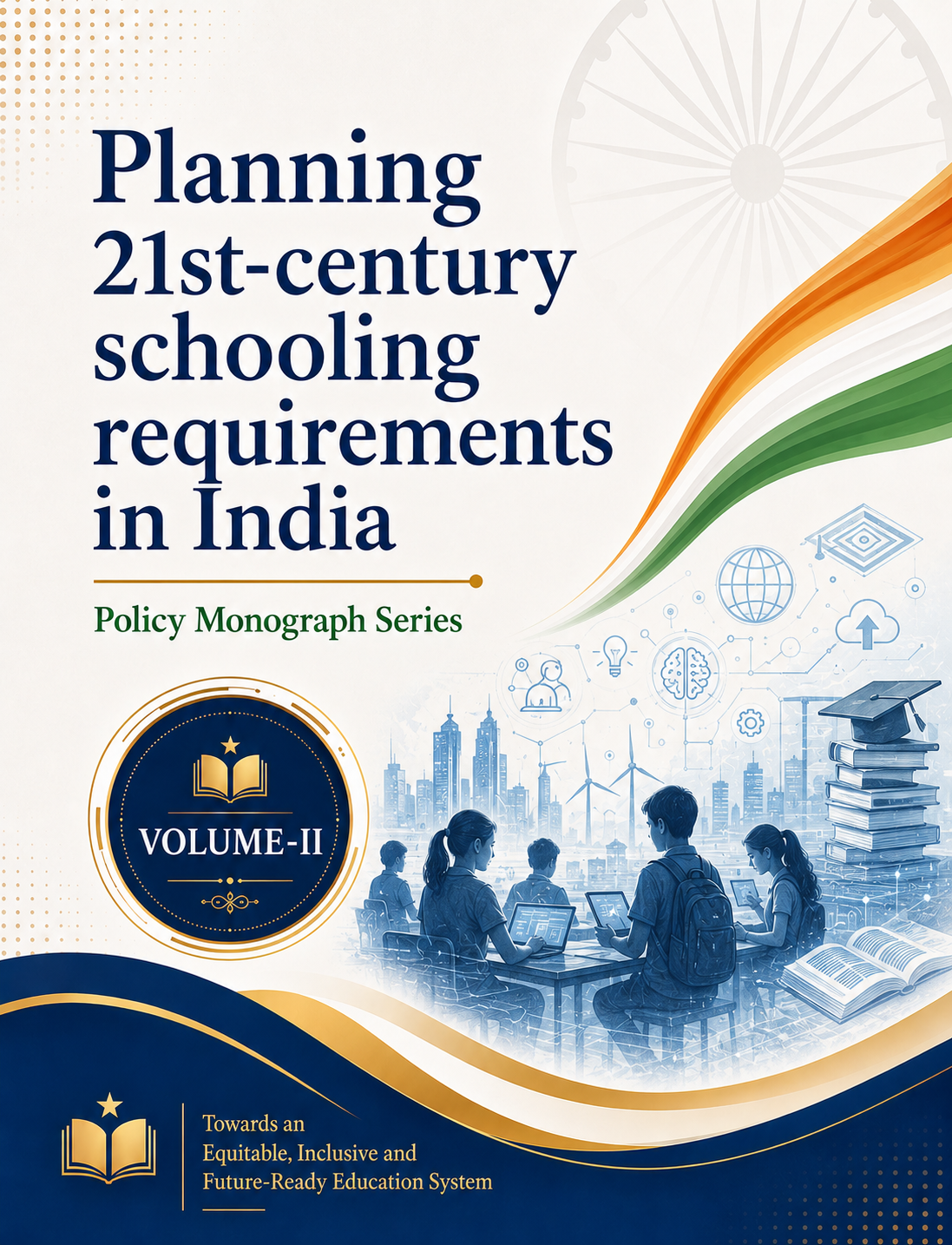
Planning 21st-Century Schooling Requirements in India
₹699.00
A comprehensive planning resource for developing safe, inclusive, digitally enabled and learning-oriented schools. Featuring the original 21st-Century Schooling Requirement Estimation Framework—21-SREF Model, this monograph helps education systems estimate infrastructure, teacher, technology, inclusion, wellbeing and governance requirements.
Author: Dr. Harshvardhan Singh
Series: Education for Viksit Bharat 2047: Policy Monograph Series, Volume 2
Publisher: Scholars Choice Press, an imprint of Educators Plus
Publication Year: 2026
ISBN: 978-81-686513-1-9
DOI: https://doi.org/10.67522/evb2047.02
Pages: 148
Language: English
Format: Digital E-Book
Edition: First Edition
Digital Product Notice: This is a downloadable electronic publication. No physical copy will be shipped.
Description
Planning 21st-Century Schooling Requirements in India is Volume II of the Education for Viksit Bharat 2047: Policy Monograph Series. This policy monograph presents a state-level framework for estimating future-ready schooling requirements in India across infrastructure, teachers, digital readiness, inclusion, learning outcomes, safety, wellbeing, governance, finance, and monitoring.
This policy monograph presents a state-level framework for estimating 21st-century schooling requirements in India. It argues that school education planning must move beyond conventional input-based indicators such as enrolment, classrooms, teachers, facilities, and textbook provision, and instead adopt an integrated requirement-estimation approach that links access, infrastructure, teacher capacity, digital readiness, inclusion, learning outcomes, safety, wellbeing, governance, finance, and monitoring.
The monograph introduces the 21st-Century Schooling Requirement Estimation Framework, or 21-SREF Model, as an original planning model for state-level education reform. The model defines schooling requirements as the full set of physical, human, digital, inclusive, academic, safety, wellbeing, governance, and financial conditions required for every child to access, continue, participate in, and benefit from schooling. It proposes eight interconnected pillars: access and enrolment; physical infrastructure; teacher availability and capacity; digital readiness; inclusion and equity; learning outcomes and assessment; health, safety, socio-emotional learning and wellbeing; and governance, finance and monitoring.
The monograph is policy-synthesis based and draws upon major national and institutional frameworks, including NEP 2020, NIPUN Bharat, Samagra Shiksha, UDISE+, NAS, PARAKH, PGI, school safety guidelines, inclusive education frameworks, Manodarpan, and SDG-4. It provides practical planning domains, indicators, monitoring tools, checklists, matrices, templates, and implementation pathways for state, district, block, cluster, and school-level use.
Positioned within the broader national aspiration of Viksit Bharat 2047, the monograph emphasises that India must move from school availability to school capability. It argues that future-ready schooling must ensure not only that schools exist, but that they have the conditions required for every learner to learn with dignity, participate meaningfully, use technology responsibly, receive support according to need, and progress successfully across stages of education.
Related products
-

Advancing grade-level competency and learning outcomes in Indian schools
₹699.00 Add to cart -

Inclusive and Neurodiversity-Sensitive Education in Indian Schools
₹699.00 Add to cart -
Future Skills and Education in India
₹699.00 Add to cart -

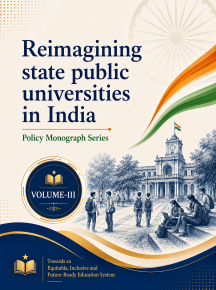
Reimagining State Public Universities in India
₹699.00 Add to cart
Reviews
There are no reviews yet.